
We know that the generating stations are situated in very long distances from the load centres . Then the power will be transferred from power stations to the load centres but such a long distance of power transfer include huge power losses . Then to improve the efficiency of the system and stepping the voltages in different levels and so many applications that we will discuss in future posts
Now I am going to discuss about the working principle of the transformer.
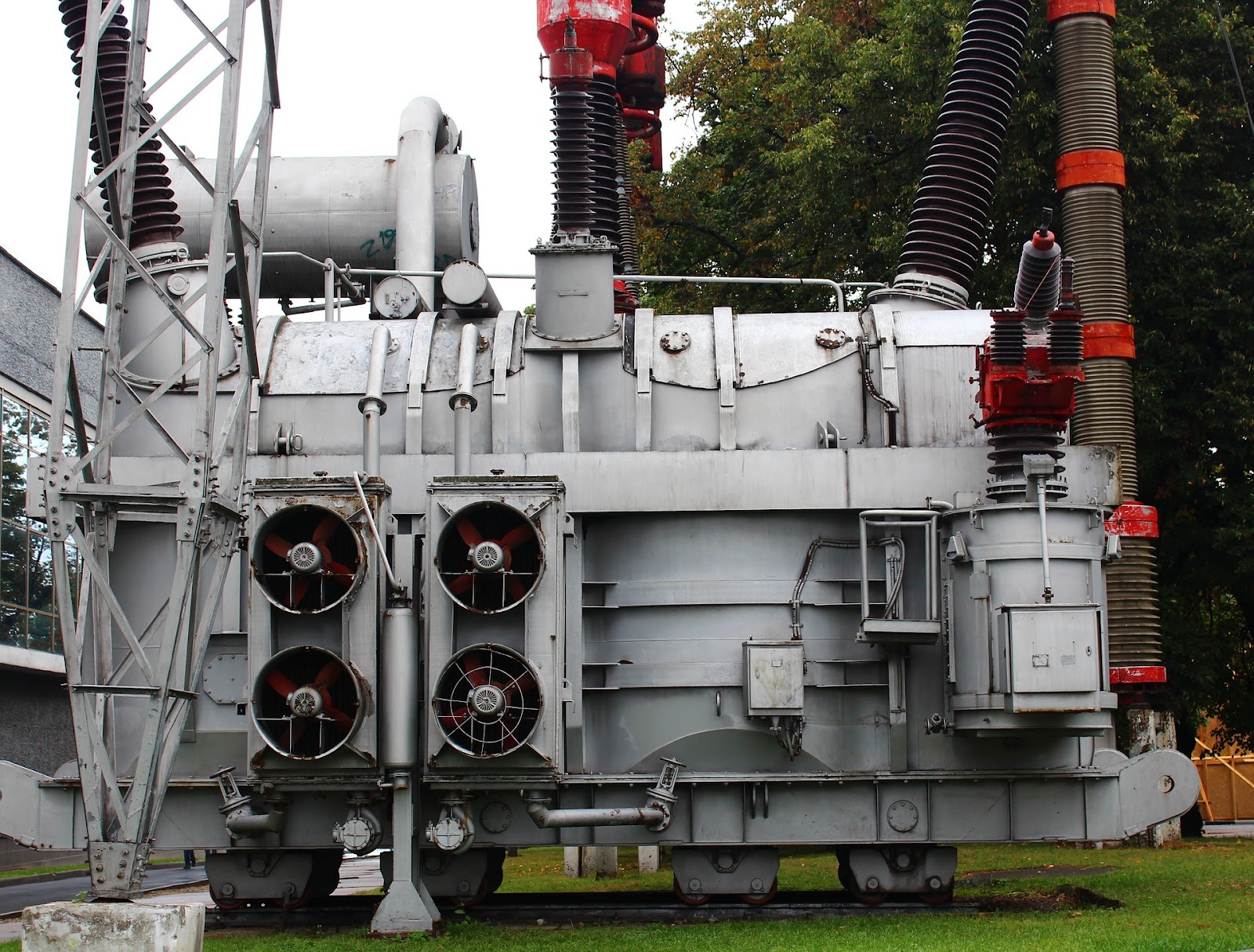
Working Principle of Transformer :
A transformer is a static (or stationary) piece of apparatus by means of which electric power in one circuit is transformed into electric power of the same frequency in another circuit. It can raise or lower the voltage in a circuit but with a corresponding decrease or increase in current. The physical basis of a transformer is mutual induction between two circuits linked by a common magnetic flux. In its simplest form, it consists of two inductive coils which are electrically separated but magnetically linked through a path of low reluctance as shown in Fig.
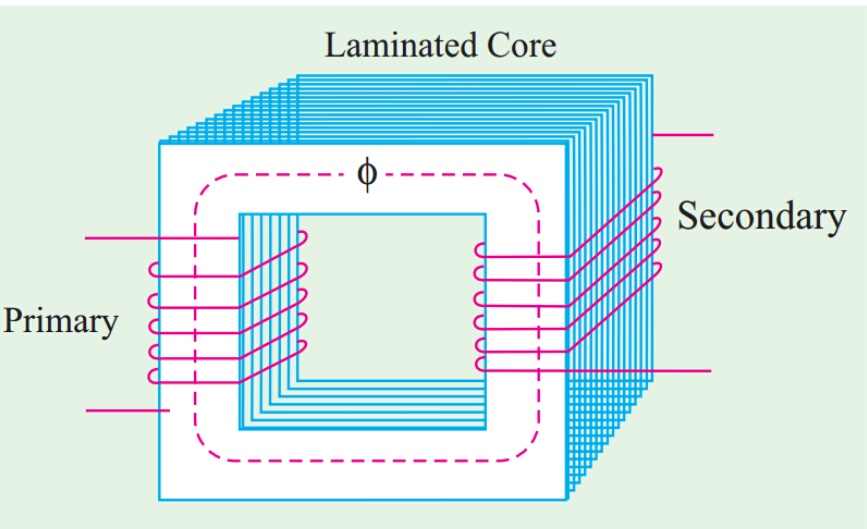
The two coils possess high mutual inductance. If one coil is connected to a source of alternating voltage, an alternating flux is set up in the laminated core, most of which is linked with the other coil in which it produces mutually-induced e.m.f. (according to Faraday's Laws of Electromagnetic Induction e = MdI/dt). If the second coil circuit is closed, a current flows in it and so electric energy is transferred (entirely magnetically) from the first coil to the second coil. The first coil, in which electric energy is fed from the a.c. supply mains, is called primary winding and the other from which energy is drawn out, is called secondary winding. In brief, a transformer is a device that
- transfers electric power from one circuit to another
- it does so without a change of frequency
- it accomplishes this by electromagnetic induction and
- where the two electric circuits are in mutual inductive influence of each other.


